Engineered floor fitter Evesham for both residential and commercial customers
We are specialists in installing engineered wood flooring as an Engineered Floor Fitter company in Evesham. Because of its stability, durability, and visual appeal, engineered wood flooring is a popular option for residential as well as commercial properties.
Our Floor Fitting Process
Consultation: They will typically start with a consultation to understand your needs, preferences, and budget. During this consultation, they may also assess the space where the flooring will be installed to provide recommendations and advice.
Floor Preparation: Before installing the engineered wood flooring, the fitter will prepare the subfloor to ensure it is clean, level, and dry. This may involve removing existing flooring, repairing any damage, and ensuring the subfloor is suitable for installation.
Installation: The fitter will then install the engineered wood flooring according to the manufacturer’s recommendations and industry best practices. This includes measuring and cutting the flooring to fit the space, laying it out in the desired pattern or design, and securing it in place.
Finishing: Once the flooring is installed, the fitter may perform any necessary finishing touches, such as adding trim or molding to the edges, applying sealant or finish to protect the flooring, and ensuring all transitions are smooth and seamless.
Cleanup: After the installation is complete, the fitter will clean up the work area and remove any debris or waste generated during the installation process. This ensures that your space is left clean and ready to use.
Maintenance Advice: Finally, an experienced Engineered Floor Fitter may provide advice on how to care for and maintain your new engineered wood flooring to ensure its longevity and beauty. This may include recommendations for cleaning products, maintenance routines, and how to address any potential issues that may arise over time.
Overall, an Engineered Floor Fitter in Solihull offers a comprehensive service to help you achieve the look and functionality you desire with your engineered wood flooring installation. They combine technical expertise with craftsmanship to deliver high-quality results that enhance your space.
How is Engineered Flooring Made?
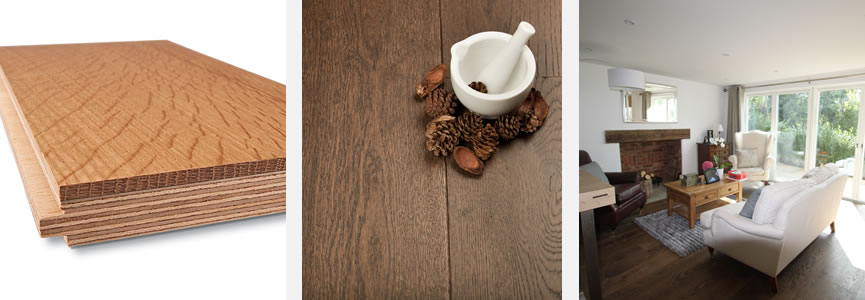
Three layers make up engineered flooring: a balanced bottom layer, a middle core part, and a top hardwood layer.
Under intense pressure, the several wood layers are glued together at a 90-degree angle.
The top layer, which varies in thickness from 0.7mm to 6mm and is made of actual hardwood, is what gives the engineered floor its appearance. The central portion of the floor, which might be composed of HDF, plywood, or softwood, is what gives it its strength and stability.
Softwood is typically used to create the bottom balancing layer. Because of its design, an engineered floor can be laid as a floating floor over any kind of subfloor because it is far more sturdy than a solid wood floor. Of all the installation choices, floating installation is by far the simplest.
Under intense pressure, the several wood layers are cemented together at a 90-degree angle.
The top layer, which varies in thickness from 0.7mm to 6mm and is made of actual hardwood, is what gives the engineered floor its appearance. The central portion of the floor, which might be composed of HDF, plywood, or softwood, is what gives it its strength and stability.
Softwood is typically used to create the bottom balancing layer. Because of its design, an engineered floor can be laid as a floating floor over any kind of subfloor because it is far more sturdy than a solid wood floor. Of all the installation choices, floating installation is by far the simplest.
Take a look at our Engineered Wooden Flooring Portfolio